
DeepSeek, Z.ai, Mistral and the Open-Model Labs That Could Pressure Big AI
By S. Tao
- open models
- artificial intelligence
- deepseek
- z.ai
- mistral
- qwen
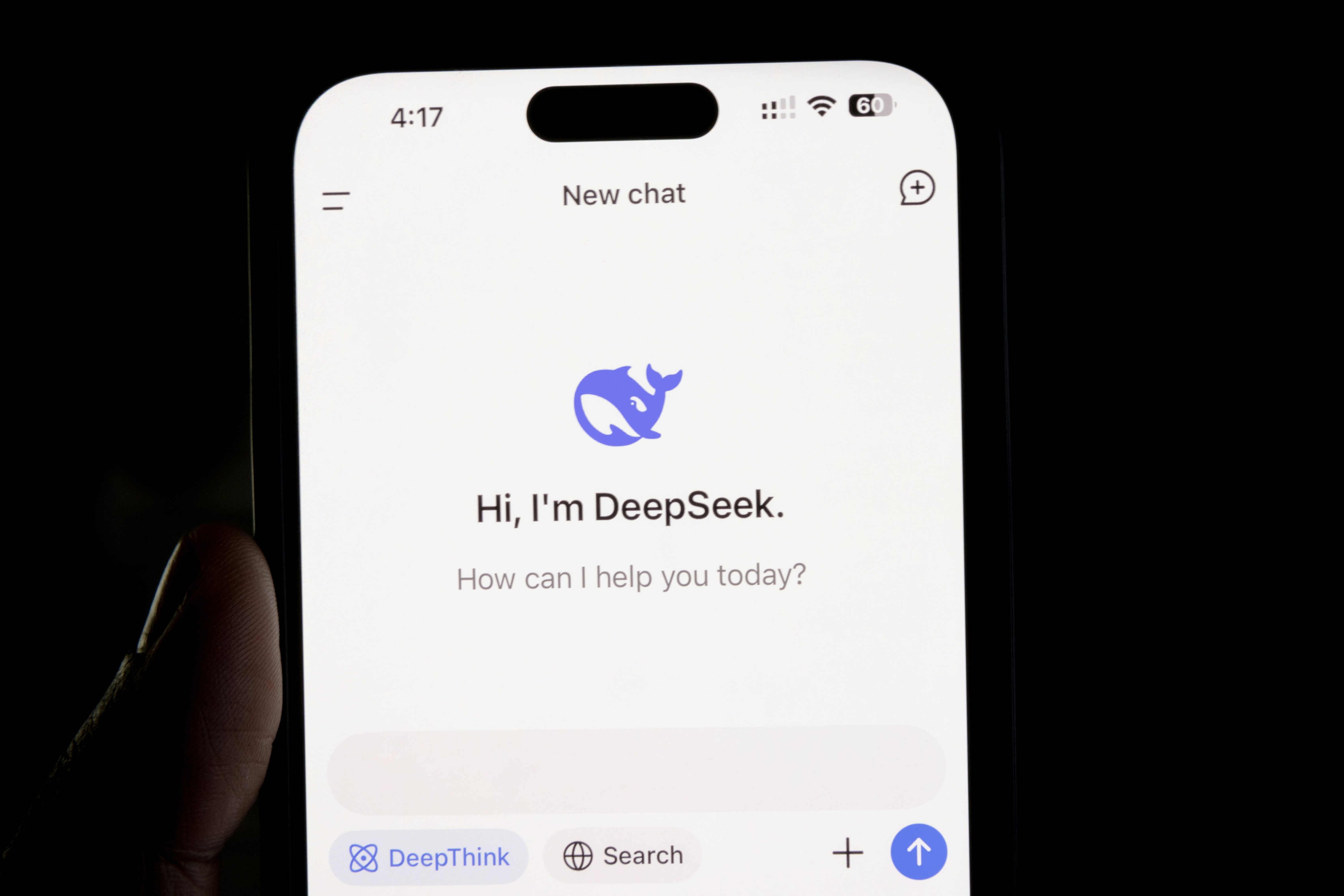
The consequential divide in AI is not simply open versus closed. It is whether a lab releases a model that developers can legally adapt, affordably run and trust inside a product—or merely publishes weights too large, too restricted or too awkward to matter. On those terms, DeepSeek, Z.ai, Mistral and Alibaba’s Qwen team are pursuing distinct strategies. Z.ai currently has the strongest case as the lab most likely to force the large proprietary providers to respond on price and agent capability. DeepSeek remains the more important proof that a comparatively small lab can reset expectations for reasoning models. Mistral is the most credible Western alternative for organizations that need an open-model supplier rather than a viral release.
The comparison hinges on four practical questions
Raw benchmark scores are useful but inadequate. A model that wins a coding test but requires an impractical cluster is not automatically the better production choice; neither is a compact model with a permissive license if it cannot reliably call tools or work across a real codebase. The useful comparison is across four axes: capability in reasoning, coding and tool use; legal freedom to fine-tune and redistribute; hardware footprint and inference efficiency; and the surrounding product operation, including documentation, APIs, deployment formats and enterprise support.
- Capability: Can the model complete multi-step work, use tools, write and revise code, and handle long context without collapsing into plausible but unusable output?
- License: Are the weights under a genuinely permissive license, or do revenue caps, attribution requirements or other terms complicate commercial use?
- Deployment: How much accelerator memory and serving expertise does the model require, and are smaller or quantized variants practical?
- Operational maturity: Does the lab offer stable APIs, model cards, serving guidance, integrations and a support path for companies that cannot treat production incidents as experiments?
Z.ai: the most direct threat to frontier-model pricing
Z.ai’s GLM line is designed around the workload that matters most to AI buyers now: long-running agentic work. GLM-5.2 is a 753-billion-parameter mixture-of-experts model released under the MIT license, with a one-million-token context window and explicit support for multiple reasoning-effort settings. The point is not that every application needs a million tokens. It is that Z.ai is optimizing for software agents that must retain a large repository, a history of tool calls and a long task plan without constantly summarizing their own state.
That positioning makes Z.ai the strongest near-term disruptive candidate. It is trying to put frontier-level coding and agent performance into a permissively licensed package while competing through API pricing as well as downloadable weights. The combination matters: a strong open model lowers the outside option for a customer considering a premium proprietary API, while a cheap hosted version makes switching easier for teams that do not want to operate a large cluster themselves.
The tradeoff is operational scale. A 753-billion-parameter model is not a laptop model, regardless of mixture-of-experts efficiency. Companies that self-host it need serious infrastructure, and independent buyers should be cautious about treating vendor-reported benchmark tables as equivalent to results on their own agent harness. Still, this is the lab most likely to make closed-model vendors defend both their prices and their lead on coding agents.
DeepSeek: the lab that changed the market’s expectations
DeepSeek’s importance is larger than its latest release. DeepSeek-R1 made reinforcement-learning-heavy reasoning, openly released weights and aggressive API pricing feel like a coherent competitive strategy rather than an academic demonstration. Its current DeepSeek-V3.2 release carries that strategy into a 685-billion-parameter model under the MIT license, combining reasoning and agent-oriented capabilities with sparse-attention work aimed at making long-context inference cheaper.
DeepSeek is still the reference point for technical disruption. It demonstrated that an open model could rapidly become a serious alternative for math, code and structured reasoning, then made its models unusually easy for the broader ecosystem to adopt through permissive licensing. That matters more than one leaderboard position: model hosts, inference engines, fine-tuning shops and application developers can build around a model when commercial reuse is straightforward.
Where Z.ai has moved ahead is focus. DeepSeek is a powerful general-purpose platform with a remarkable reasoning identity; Z.ai is more explicitly packaging its flagship around long-horizon agents and coding workflows. DeepSeek also presents a sharper operational gap between its enormous flagship weights and the smaller systems many enterprises can deploy cheaply. For a team building a local reasoning stack or a research group that wants a broadly reusable base, DeepSeek remains exceptionally compelling. For a company buying an agent platform today, Z.ai’s product direction is easier to read.
Mistral: the best choice when the model vendor matters as much as the model
Mistral competes differently. Its open releases include Mistral Large 3, a 675-billion-parameter mixture-of-experts model with 41 billion active parameters, and smaller multimodal models such as Mistral Small 4. The company has consistently used Apache 2.0 for major open releases, which is a clean answer for developers who need permission to modify, redistribute and commercialize their work without a bespoke negotiation.
Mistral’s advantage is not that it always has the highest headline score. It is a more complete vendor for organizations that need model selection, APIs, deployment options, specialist models for coding and document work, and a route to commercial support. Its smaller releases have also been unusually useful: Mistral Small 3.1 was explicitly positioned to run on a single RTX 4090 or a Mac with 32GB of RAM. That is a materially different buying decision from provisioning a cluster for a 600-billion-plus-parameter model.
Mistral is genuinely better than DeepSeek or Z.ai for a buyer that values a European supplier, clear enterprise engagement and a portfolio spanning lightweight local deployment through large hosted models. It is less likely, however, to shock the entire market with a single frontier release. Its strategy is sustainable productization, not maximum discontinuity. That can be the more valuable strategy for a regulated or infrastructure-constrained customer, but it is less likely to trigger an industry-wide price war.
Qwen: the broadest open-model platform
Qwen deserves to be treated as a first-tier contender rather than a footnote to DeepSeek. Its Qwen3 family spans dense models from 0.6 billion to 32 billion parameters as well as a 235-billion-parameter mixture-of-experts model with 22 billion active parameters. The releases use Apache 2.0 and cover the practical range that many teams actually need: local prototypes, fine-tuned departmental models, multilingual systems and larger hosted deployments.
Qwen’s strength is breadth. A company can standardize on one family while choosing a small model for classification, a medium model for internal assistants and a larger reasoning model for code or analysis. That creates an ecosystem advantage: fine-tunes, quantizations, inference recipes and application integrations accumulate around a stable family rather than a single flagship moment.
Its weakness is that breadth can obscure a clear flagship proposition. DeepSeek owns the reasoning-disruption narrative; Z.ai is staking out agents; Mistral sells an enterprise-grade portfolio and regional alternative. Qwen can match much of that coverage, but it is not as sharply differentiated. It may prove to be the most useful lab for the median developer even if it is not the one that most visibly unsettles OpenAI, Anthropic or Google.
The smaller challenger: Moonshot AI
Moonshot AI’s Kimi K2 and K2.5 releases make it a serious agent and coding contender, but its modified MIT license is less clean than MIT or Apache 2.0. The license requires prominent “Kimi K2” attribution for commercial products above specified user or revenue thresholds. That is not prohibitive for most teams, but it is exactly the kind of condition procurement and legal groups notice. Moonshot belongs on a technical shortlist, particularly for agent evaluation, but it is not yet the clearest broad-market disruptor.
What “open source” should and should not mean here
Most of these releases are best described as open-weight models with permissive licenses, not fully reproducible open-source projects in the software-engineering sense. The weights are available, and in several cases the license permits commercial modification and redistribution. That does not mean the training data, full training pipeline, data curation process or every ingredient required to reproduce the model has been released. Buyers should value permissive weights, but should not confuse them with complete transparency.
The distinction is especially important for risk planning. An organization can self-host model weights and control inference data, yet still depend on the originating lab and community for tokenizer updates, serving optimizations, safety tooling, fine-tunes and bug fixes. “Open” reduces lock-in; it does not erase operations.
Recommendation
For a developer platform, coding-agent company or technically capable enterprise that wants the best chance of replacing an expensive closed-model API, choose Z.ai’s GLM-5.2 as the first model to evaluate. Its MIT license, agent-first design, one-million-token context and aggressive efficiency story make it the open-model lab most likely to disrupt the large labs over the next cycle. Run it against your own repository tasks and tool-use traces before committing; its size makes self-hosting a real infrastructure decision.
Choose DeepSeek-V3.2 instead if your priority is a permissively licensed general reasoning model with the deepest disruptive track record and a mature community of downstream deployments. Choose Mistral if you need smaller deployable models, a clearer enterprise supplier relationship or a European partner. Choose Qwen if you need a broad, Apache-licensed family across many sizes and languages. But if the question is who is most likely to make the largest proprietary labs cut prices and accelerate their agent roadmaps, Z.ai is the best answer now.