
· 8 min read
Punch Cards, Assembly, C, Python, and Vibe Coding: What Each Era of Programming Actually Optimizes
By C. Zhang
- programming
- software engineering
- history
- artificial intelligence
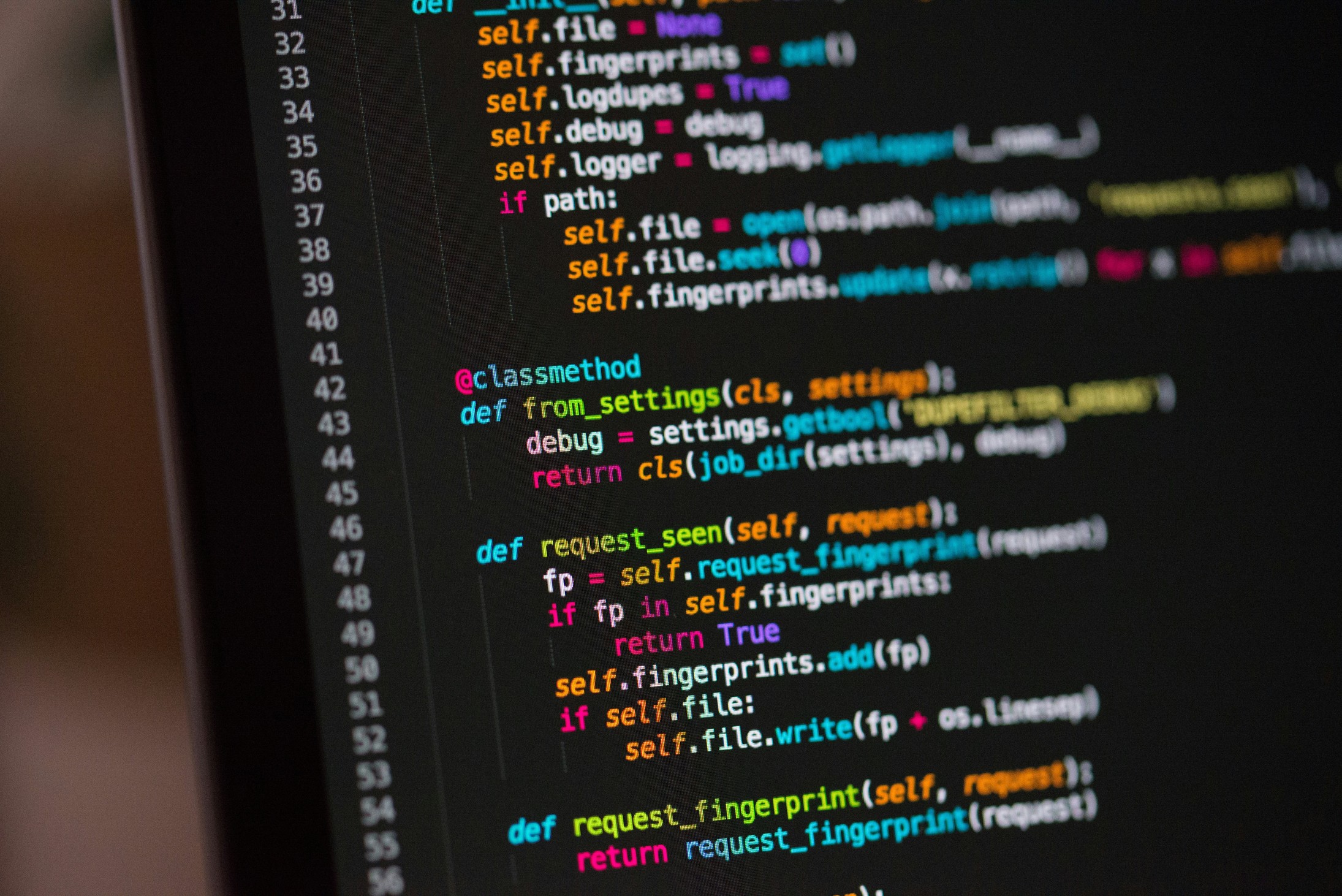
“Coding with punch cards” was not a programming language so much as a way of submitting programs: instructions were represented as holes in a physical deck, carried to a reader, and usually run in batches. Assembly, C, Python, and vibe coding are better understood as successive changes in abstraction—each moving more work away from the programmer’s hands and toward tools, runtimes, compilers, or models. The useful comparison is not old versus new. It is which approach gives you the right combination of feedback speed, machine control, reliability, portability, and understanding for the problem in front of you.
The axes that matter
Five questions separate these approaches more clearly than nostalgia or novelty does. First: how quickly can you test an idea and see the result? Second: how directly can you control memory layout, instructions, timing, and hardware behavior? Third: how much of the system can you understand well enough to debug without guessing? Fourth: how easily does code survive a move to another machine, operating system, or team? Fifth: where does the labor sit—writing instructions, designing abstractions, validating output, or specifying intent?
- Feedback loop: the time and friction between a change and evidence that it worked.
- Machine control: access to registers, instructions, memory layout, timing, and device behavior.
- Abstraction cost: how much implementation detail the programmer must manage personally.
- Portability and maintenance: how readily code moves and remains understandable over time.
- Verification burden: whether correctness is established by reasoning, tests, inspection, or trust in generated output.
Punch cards: the cost of slow feedback
A punched-card workflow made mistakes tangible. A program was a deck whose order mattered; one misplaced card could alter the job, and a correction could mean repunching and resubmitting part of the deck. Depending on the machine and workplace, the program might wait in a batch queue before anyone learned whether it compiled, ran, or failed immediately. That delay forced discipline: programmers planned, reviewed, and dry-ran logic before spending a machine run on it.
The strongest lesson from the card era is not that inconvenience produced better programmers. It is that expensive feedback changes behavior. When every run is costly, people invest more before execution. The downside is obvious: exploratory work, incremental debugging, and rapid iteration become painfully slow. A modern programmer can preserve the useful part—careful design and review—without preserving the queue, the card punch, or the risk of dropping a deck on the floor.
Assembly: maximum visibility, maximum responsibility
Assembly language maps closely to a processor’s instruction set. The programmer works with registers, branches, loads, stores, calling conventions, flags, stack discipline, and addresses. That makes it appropriate when those details are the problem: a boot sequence before a higher-level runtime exists, a tiny embedded target, a context switch, a device driver boundary, a cryptographic primitive, or a performance-critical routine whose generated machine code must be inspected.
Assembly’s advantage is not automatically speed. A good compiler can produce excellent machine code, and hand-written assembly can be slower or less correct than compiled C when the programmer misunderstands the hardware. Its real advantage is control and observability. The programmer can account for every instruction that matters. The price is architecture dependence and a large surface area for errors: an incorrect register save, stack adjustment, or branch condition can corrupt a program far from the source of the bug.
Assembly is genuinely better than the alternatives when the execution environment is constrained enough that language runtime costs, compiler choices, or exact instruction sequences are unacceptable. It is a poor default for ordinary application code because routine tasks—string handling, memory safety, data structures, error paths, portability—consume attention that could be spent on product behavior.
C: the durable systems-language compromise
C keeps a relatively direct model of memory and data while delegating instruction selection and many low-level mechanics to a compiler. Pointers, manual allocation, integer widths, struct layout, and undefined behavior mean that C programmers still need a clear mental model of the machine. But functions, separate compilation, standard libraries, and compiler optimization make it vastly more productive than writing everything in assembly.
Its central tradeoff is explicit power without strong safety rails. C can be small, predictable, and deployable almost anywhere a compiler exists. It also makes buffer overruns, use-after-free defects, integer mistakes, and invalid pointer access easier to create than in languages with managed memory and stronger runtime checks. C remains a compelling choice for operating-system components, embedded firmware, runtimes, interoperability layers, and libraries where binary size, latency, and hardware access matter. For a networked business application, those benefits often do not outweigh the security and maintenance costs.
Python: fast expression and a wide practical surface
Python trades low-level control for a short edit-run-inspect loop. Its syntax and standard tooling make it well suited to automation, data work, web services, tests, internal tools, prototypes, and glue code that connects other systems. A programmer can express a transformation or call an external service without first managing memory, writing build rules for every small experiment, or specifying a machine-level representation.
That convenience has boundaries. Python generally gives less predictable performance than C or assembly, and its runtime model makes it a poor fit for the tightest latency, memory, and startup constraints. It can also conceal costly operations behind simple-looking code: an innocent loop, conversion, copy, or remote call may be the actual bottleneck. Python is often the better engineering choice when developer time and clarity dominate; C is often better when the computer’s resource budget is the binding constraint.
Vibe coding: intent is cheap; evidence is not
Vibe coding shifts the interface again. Instead of writing every implementation detail, the programmer describes a desired feature to an AI coding system, accepts or revises generated code, runs it, and iterates. For a throwaway script, a prototype interface, test scaffolding, documentation, or an unfamiliar framework, this can compress the distance from idea to running artifact. It is especially effective when the task is conventional and the programmer can recognize a good result.
But generated code does not remove engineering work; it relocates it. The limiting skill becomes writing a precise request, examining assumptions, running tests, checking security and data-handling behavior, and understanding enough of the implementation to maintain it after the model’s answer is gone. A program that appears to work on a happy-path demo may still mishandle authorization, concurrency, failure recovery, schema changes, costs, or edge cases. Vibe coding is therefore strongest when validation is easy and the cost of a wrong answer is low or well-contained.
Compared with Python, vibe coding can be faster at producing a first draft but weaker at producing understanding. Compared with C or assembly, it gives up even more direct control. Its special risk is epistemic: code may look coherent before its author knows whether it is coherent. That makes it a poor sole method for safety-critical, security-sensitive, regulated, or long-lived core systems unless a capable engineer owns review and verification.
What changed—and what did not
The history is a steady reduction in the cost of expressing a program. Punch cards made execution scarce. Assembly made the machine explicit. C made machine-oriented programming portable enough to scale. Python made many routine programs cheap to write and revise. Vibe coding makes a first implementation cheaper still. None of those changes eliminates the need to define behavior, identify failure modes, or prove that the software does what its users need.
The older approaches impose understanding before execution because they leave little room to avoid it. The newer approaches let teams defer that understanding, which is often productive—and sometimes dangerous. The right response is not to reject abstraction. It is to match verification to the abstraction level. A generated payment workflow deserves tests, review, threat modeling, and observability; a generated script to rename local files may need only a careful preview and a backup.
Recommendation: use Python plus AI assistance for the working programmer, then move downward only when the constraint is real
For a developer building internal tools, web services, data pipelines, prototypes, and automation, Python with disciplined AI assistance is the best default. Python keeps the code readable enough to inspect, while AI can accelerate boilerplate, tests, API integration, and exploration. Treat model output as a draft: run it, test it, review it, and do not merge code you cannot explain at the level required to maintain it.
Choose C when you can name a concrete systems constraint—hardware access, a strict memory budget, a binary interface, low and predictable latency, or a platform layer that cannot carry a larger runtime. Choose assembly only where exact machine behavior is itself the requirement. Study punch-card workflows for their lesson in deliberate thinking, not as a development model to revive. The reader who wants to ship reliable modern software should use the highest-level tool that still permits adequate measurement, testing, security review, and operational control.