The Slightly Embarrassing Lesson of Next-Word Prediction
By C. Jin
- artificial intelligence
- language models
- intelligence
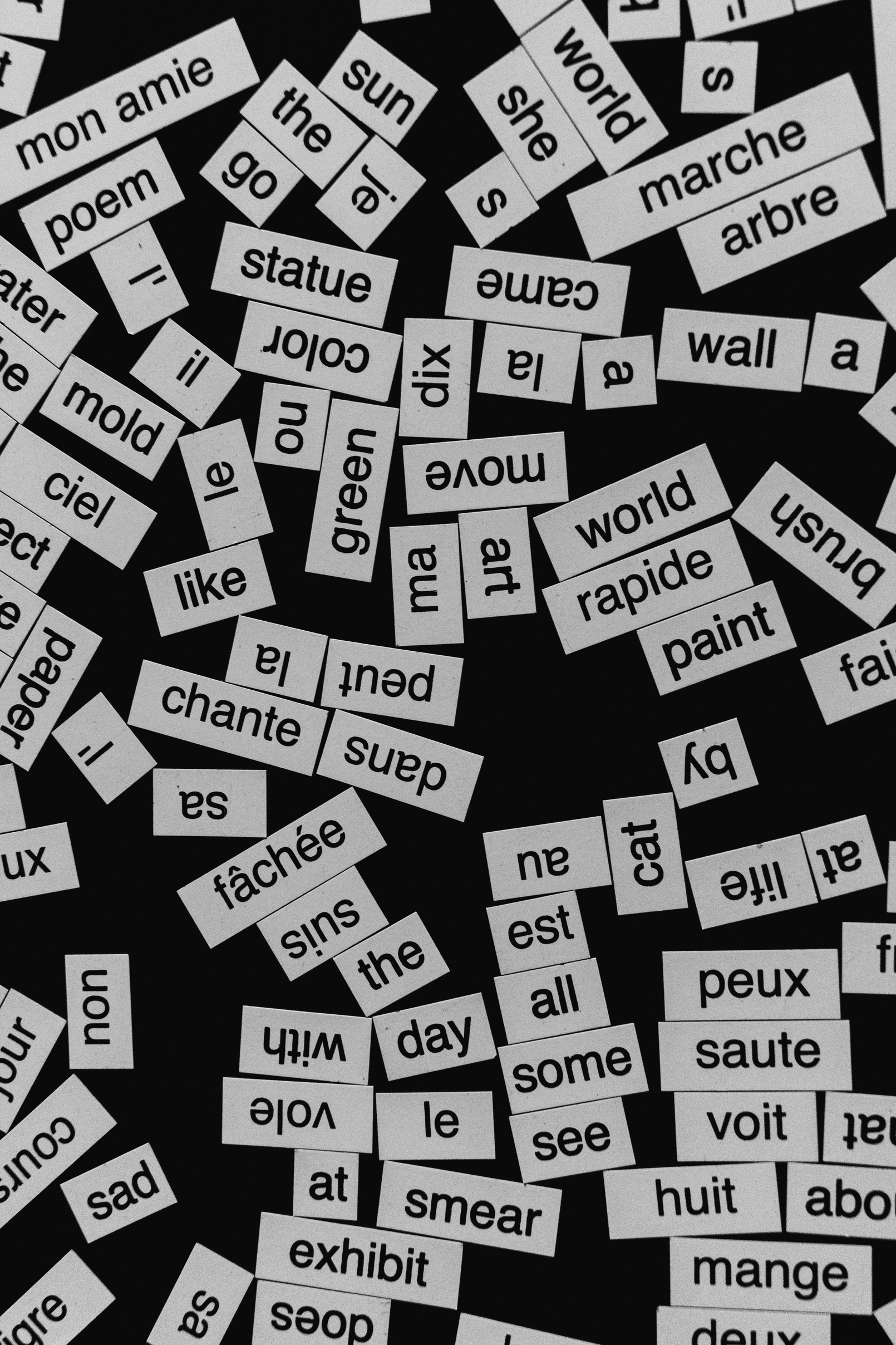
There is something faintly insulting about the story we now have to tell ourselves: feed a machine a ruinous quantity of human writing, ask it to guess the next token, and—after enough electricity, engineering and capital expenditure—it begins to write code, explain proteins, draft contracts, translate languages and occasionally remind you, with unnerving politeness, that you attached the wrong spreadsheet.
The original task sounds almost aggressively modest. A language model sees a sequence of text and assigns probabilities to what comes next. Given “the capital of France is,” it should put a great deal of weight on “Paris.” Given “please find the attached,” it should perhaps learn the depressing statistical prominence of “deck,” “invoice” and “revised deck final v7.” This is not presented as an inner life, a theory of the world or a tiny philosopher in a server rack. It is a prediction problem.
And yet, as models became larger, trained on broader data and given more computation, the prediction problem started producing capabilities that looked inconveniently like reasoning. To predict technical prose, a system must track technical relationships. To continue a piece of code, it must model enough of programming syntax and structure to avoid immediately setting the repository on fire. To answer a question about a historical event, it needs some compressed representation of people, dates, causes and consequences. It may not possess those things in the human sense. But it turns out that producing the right continuation often requires building something that behaves rather a lot like knowledge.
Why the trick is less trivial than it sounds
“Just predicting next words” is technically true in the same way that “just arranging atoms” describes a suspension bridge. The phrase identifies the mechanism while making a polite effort to ignore everything the mechanism must accomplish.
Language is not a bag of independent word pairs. It carries descriptions of physical objects, social conventions, mathematical arguments, legal rules, computer programs, private anxieties and recipes written by people who believe a tablespoon is a personality test. A model that reliably predicts how such material continues has pressure to infer regularities behind the text. It must learn that a dropped glass is more likely to break than to file a complaint, that a function call needs the right arguments, and that a sentence beginning “with respect” is frequently about to become less respectful.
This does not mean the model has discovered truth merely by absorbing prose. It can repeat errors, fabricate details, miss context and state nonsense with the serene formatting of a quarterly report. Prediction is a powerful route to competence, not a certificate of understanding. The same system that can explain a difficult concept may also invent a citation for it, which is a useful reminder that fluency and reliability are different products.
The awkward comparison with people
The uncomfortable joke is not that computers have become people. It is that people may be more statistical than we find flattering. Human beings also spend their lives exposed to enormous streams of examples: conversations, gestures, books, mistakes, consequences, television dialogue, parental warnings and the inexplicable fact that every office has one printer with a personal grievance.
We learn patterns from this material. We anticipate what someone will say, what an object will do, what a sentence means in context and what happens if we touch the pan after being told not to touch the pan. We do not merely predict words, of course. We have bodies, needs, memory, emotions, agency and the ability to become convinced that a three-minute video has revealed a major hidden truth. But the success of language models suggests that prediction itself may be a more central ingredient of intelligence than many people expected.
That possibility is mildly humiliating because humans have traditionally assigned intelligence to grander internal furniture: reason, reflection, consciousness, wisdom, perhaps a well-organized desk. Then a system optimized to estimate the next bit of text begins passing parts of exams, writing plausible essays and helping debug software. The desk remains unorganized, but the philosophical furniture has shifted.
What follows—and what does not
- Language competence can emerge from a simple training objective when the data, model capacity and computation are sufficiently large. “Simple” refers to the objective, not to the industrial machinery required to make it work.
- Useful performance is not proof of consciousness, human-style comprehension or moral status. Those are separate questions, and none is settled by an eloquent paragraph about sourdough.
- A system that predicts well can still be wrong in consequential ways. Verification, domain expertise and clear limits remain necessary, especially in medicine, law, finance and other fields where confident nonsense has traditionally been a management concern.
- Humans are not reducible to autocomplete. But we may have underestimated how much intelligent behavior can arise from learning to anticipate patterns in rich experience.
The practical lesson is less mystical than it first appears. If prediction can yield broad capabilities, then the data a model sees, the feedback it receives and the environments in which it operates matter enormously. A system trained on text alone may become remarkably articulate while remaining brittle about the real world. Give systems tools, tasks, feedback and ways to check their work, and their behavior can change again. This is not magic. It is optimization discovering that reality has structure, which was considerate of reality.
Perhaps the final insult is that the black box is not wholly opaque in principle. We know the broad recipe: adjust a vast number of parameters so the model becomes better at predicting its training material. What remains difficult is explaining, in human-sized terms, exactly how particular internal representations produce a particular capability. That gap is important. A machine can be useful before we fully understand it, but deploying one at scale without understanding its failure modes is how “helpful assistant” becomes “unplanned incident review.”
So yes: it is funny that a task which sounds like autocomplete can produce behavior we are tempted to call intelligent. It is funny in the way a scientific result is funny when it punctures a cherished story. We expected intelligence to arrive with trumpets, self-knowledge and perhaps better taste in email. Instead, it arrived by repeatedly asking what comes next. There are worse ways to be humbled.