
The Slightly Rude Economics of Copying an LLM
By A. Yang
- artificial intelligence
- llms
- machine learning
- distillation
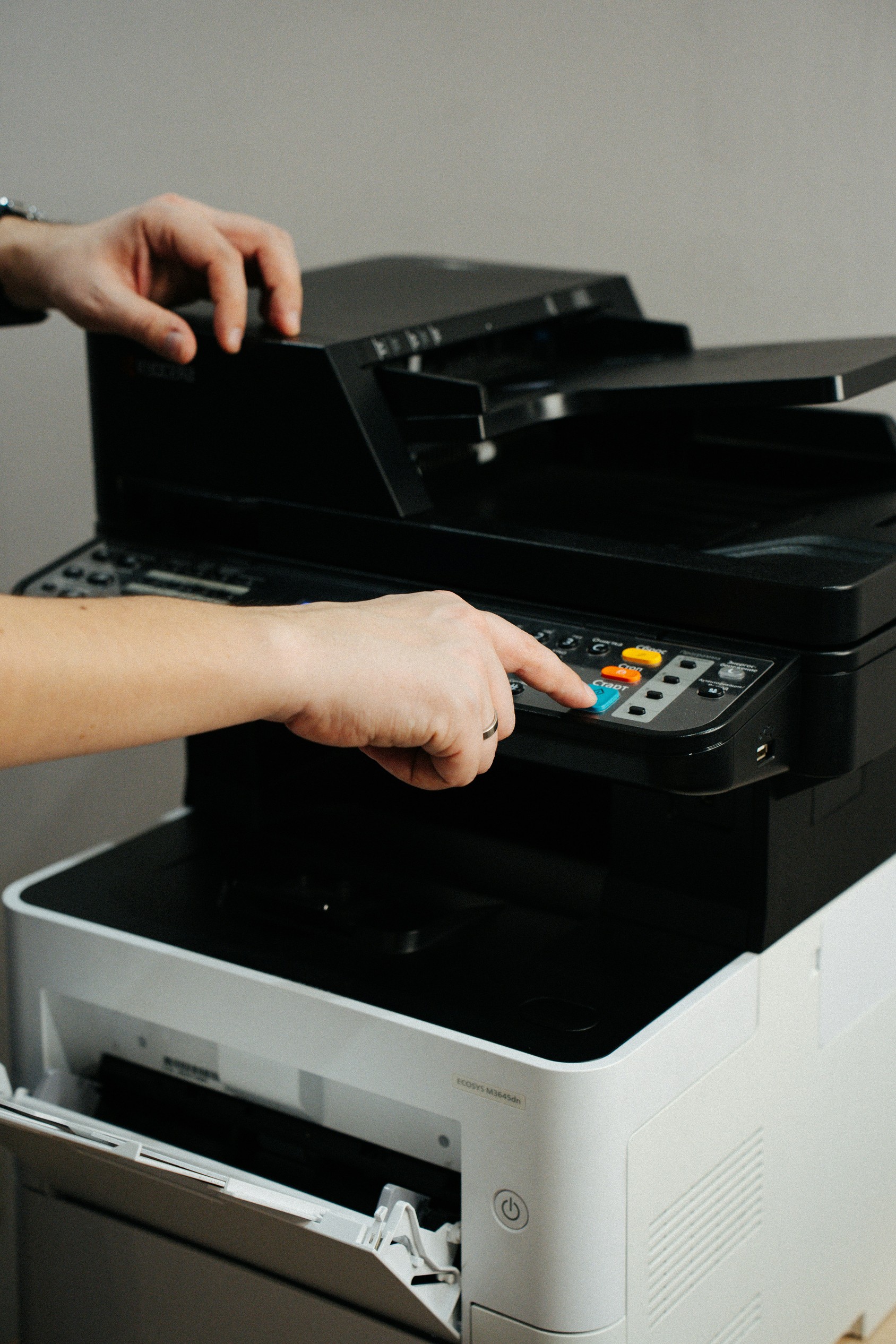
There is something comically severe about the modern LLM business model. One lab spends years assembling researchers, data centers, specialized chips, evaluation suites, safety teams, and a utility bill that appears to have been prepared by a small nation. Another party then asks the finished model enough well-chosen questions, trains a smaller model on the answers, and walks away with a system that can capture a large share of the practical value. The second party has not recreated the original achievement. It has, however, acquired an alarming amount of its useful surface area.
What distillation actually copies
Model distillation is not magic and it is not normally a literal extraction of weights, training data, or internal reasoning. A “student” model is trained to imitate the outputs of a stronger “teacher” model. Those outputs can include answers to prompts, structured labels, rankings, code completions, explanations, tool-use trajectories, or probability distributions over likely next tokens.
The important observation is that a capable teacher model does more than answer a question correctly or incorrectly. Its response can contain a compressed record of many decisions: which facts appeared relevant, what format fit the request, what caveat was needed, how to organize an explanation, and when not to say the first plausible thing that came to mind. Training on that behavior gives the student a much richer signal than a conventional dataset containing one bare answer per example.
This is why a smaller model can become surprisingly competent at tasks that look expensive from the outside. It may not know everything the teacher knows, and it may fail more often at difficult edge cases. But on the narrow band of tasks people actually pay for—customer-support drafts, extraction, classification, routine code, document summaries, structured responses—that gap can be much smaller than the teacher’s development budget would prefer.
Why “80 percent” can be the commercially important number
The phrase “80 percent of the wins” should not be treated as a universal benchmark. Distillation results vary sharply with the task, the quality and diversity of the prompts, the student model’s size, the teacher’s behavior, and whether the evaluation measures polished demos or production failures. Still, the business intuition is real: a model that is merely very good can be far more useful than one that is theoretically best if it is cheaper, faster, easier to deploy, and available without sending every user request to someone else’s server.
- A smaller model can reduce inference cost and latency.
- It can be tuned for a bounded workflow rather than general conversation.
- It may run in a private environment, which matters for organizations handling sensitive material.
- Its failures can be easier to study when the task and output format are tightly defined.
- It may be good enough that users notice the response time before they notice the missing few percent.
This creates a mildly humiliating asymmetry. The frontier lab must pay for the long tail: rare languages, unusual scientific questions, difficult reasoning, adversarial prompts, safety work, reliability engineering, and the endless collection of cases that occur only after a product is released. The copier can concentrate on the profitable middle. It is rather like funding the construction of a national rail network, then discovering that someone else has opened a very successful shuttle service between the airport and downtown.
The part that is not easy
Calling distillation “easy” is useful only as a form of contrast. It is easier than building a frontier model from scratch; it is not necessarily easy in the ordinary human sense. Good distillation requires a clear target task, a legal and technical way to obtain teacher outputs, a prompt set that covers real usage rather than merely flattering examples, filtering for bad or inconsistent responses, training infrastructure, and evaluation that catches the ways imitation can become brittle.
A student trained on shallow prompts can learn shallow competence. A student trained only on the teacher’s confident-looking outputs can inherit confident-looking mistakes. And if the teacher’s answers are generated through an interface with limits, policy controls, rate caps, or terms that prohibit creating a competing model, the engineering question arrives accompanied by a legal and contractual question. This is the portion of the story where the phrase “just scrape it” stops sounding like a business plan and starts sounding like an email that will later be read aloud by counsel.
Why frontier work still matters
Distillation does not make original model development pointless. It makes it foundational. A student can imitate capabilities that are visible in the teacher’s outputs, but it generally cannot cheaply leap beyond them. New reasoning methods, better multimodal systems, stronger tool use, improved reliability, more capable base models, and safety techniques still have to originate somewhere. The first organization to develop them absorbs the uncertainty; everyone else gets to inspect the menu.
That is also why the cycle is likely to persist. Frontier models establish a new capability ceiling. Distillation and fine-tuning package portions of that capability into cheaper, narrower systems. Those systems spread through products. Then the market discovers the next set of tasks where “good enough” is not good enough after all, and the expensive people return to the lab. It is not a perfect theft machine or a perfect innovation machine. It is an industrial arrangement in which the person who invented the printing press and the person who sells office printers are both, regrettably, necessary.
The practical lesson
For teams choosing models, the useful question is not whether a distilled model is an illegitimate imitation or a heroic efficiency measure. It is whether it meets the actual requirements of the job: accuracy on representative inputs, performance on edge cases, cost per completed task, latency, privacy, maintainability, and the rights attached to its training and deployment.
For frontier-model builders, the lesson is less comforting. If a capability can be demonstrated repeatedly through outputs, it may eventually be reproduced approximately by someone with enough examples, competence, and patience. The durable advantage is therefore not just producing one impressive model. It is continuing to produce the next one, while making the product, distribution, trust, and infrastructure difficult to copy along with the answers.